

Power Towers and Cell Towers Manufacturing: From Raw Steel to Fully Assembled Giants
Building a power tower or cell tower is not just a matter of welding steel together. It is a highly engineered process that requires precision, strict compliance with international standards, and seamless collaboration between engineers, manufacturers, logistics providers, and installation teams. Below we take a deep dive into the step-by-step manufacturing and delivery process of telecom and power transmission towers — from the first contract signature to the final on-site installation.
1. Contract Signing: Establishing Technical and Commercial Foundations
Every successful tower manufacturing project begins with a formal contract, which sets the framework for the entire lifecycle of the project. This stage is not just a legal formality, but the technical and commercial cornerstone that ensures smooth execution.
Key elements typically included in tower contracts are:
-
Technical Specifications
The contract clearly defines the required tower height, load-bearing capacity, wind resistance level, seismic resistance, and foundation design. These parameters are often based on national and international engineering standards, such as:-
ASTM International Standards (commonly used for steel quality and testing).
-
ISO Standards for materials, fabrication, and quality control.
-
GB/T standards for steel structure and mechanical properties in Chinese engineering projects.
-
-
Material Standards
Contracts specify the steel grade (e.g., Q235, Q355, ASTM A36, or equivalent), coatings, and corrosion protection requirements. Many international projects also require documentation of Mill Test Certificates (MTCs) to confirm compliance. -
Delivery Terms & Incoterms
Logistics are defined upfront using Incoterms, such as:-
FOB (Free on Board): The buyer assumes responsibility once goods are loaded at the port.
-
CIF (Cost, Insurance, Freight): Seller covers cost, freight, and insurance until destination port.
-
DDP (Delivered Duty Paid): Seller takes responsibility all the way to the buyer’s site.
-
-
Payment Structure
Given the scale of tower projects, payments often follow Letter of Credit (LC) or Telegraphic Transfer (T/T)methods, with stages tied to milestones such as raw material procurement, fabrication, and shipment. -
Compliance with Communication Standards
For telecommunication towers, compliance goes beyond steel standards. Contracts often require alignment with global telecom infrastructure standards such as 3GPP (which governs 4G, 5G, and beyond), ensuring the towers meet the performance needs of modern mobile networks.
👉 This stage ensures mutual alignment: the client secures performance guarantees, and the manufacturer has clear guidance on execution. Any misunderstanding at this stage could lead to costly redesigns or delays, so detailed documentation is critical.

2. Technical Drawing and Tower Design
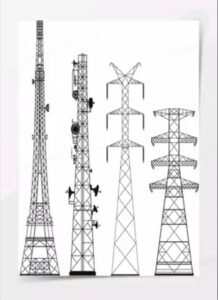
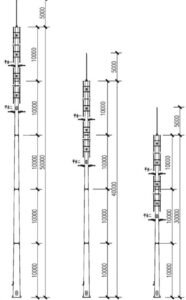
After the contract signing, the project enters the engineering and design phase, where precision and compliance with global standards become crucial. At this stage, every technical parameter is transformed into detailed drawings and structural calculations that guide the entire manufacturing and construction process.
Key Activities in This Stage:
-
CAD Drawings & 3D Modeling
Engineering teams use advanced CAD software (AutoCAD, SolidWorks, Tekla Structures) to prepare 2D and 3D tower layouts. These drawings define tower geometry, member sizes, bolt configurations, and connection details. For large projects, Building Information Modeling (BIM) may be used to simulate the tower in its real environment. -
Structural Analysis & Simulation
Before a single steel plate is cut, finite element analysis (FEA) is carried out using software like ANSYS or STAAD.Pro. This ensures the tower can withstand:-
Static loads (self-weight of steel, antennas, and cables).
-
Dynamic loads (wind gusts, earthquakes, vibrations from attached equipment).
-
Environmental stress factors (temperature variation, corrosion risks in coastal or desert climates).
By simulating these conditions, engineers minimize risk and ensure structural integrity throughout the tower’s lifespan.
-
-
Foundation Engineering
A tower is only as strong as its foundation. Engineers design foundation drawings based on:-
Soil investigations (geotechnical reports on bearing capacity and soil type).
-
Seismic zones and earthquake resistance requirements.
-
Groundwater levels and corrosion protection strategies.
Depending on local conditions, foundations may include reinforced concrete pads, pile foundations, or rock anchoring systems.
-
-
Compliance with International Standards
To guarantee safety and interoperability, tower design follows recognized global codes, such as:-
TIA-222: The benchmark design standard for telecom towers in North America (TIA Standards).
-
Eurocode EN 1993: For steel structure design in Europe.
-
GB/T 5031 (China) and IS 802 (India) for regional projects.
For telecom projects, designs often align with 3GPP specifications to ensure compatibility with 4G/5G rollout (3GPP Official).
-
-
Client Review and Approval
Once the drawings and simulations are complete, the manufacturer shares them with the client for review. This stage ensures:-
All antennas, microwave dishes, and radio units are correctly positioned.
-
Safety margins meet or exceed local regulations.
-
The project is aligned with regulatory approval processes (e.g., civil aviation height restrictions, municipal building permits).
-
👉 In summary, the technical drawing and design phase transforms contractual requirements into a precise engineering blueprint. It is the backbone of manufacturing, ensuring that the final power tower or cell tower meets safety, durability, and performance expectations.
3. Engineering Modeling and Simulation
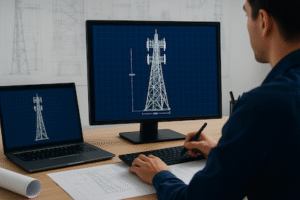
Once the technical drawings and tower design are finalized, the next step is to validate those designs through engineering modeling and simulation. This stage ensures that every load, stress, and environmental factor has been accounted for before the project moves to physical manufacturing.
Key Components of the Modeling Process:
-
Finite Element Analysis (FEA)
Using advanced software such as ANSYS, Abaqus, or SAP2000, engineers divide the tower structure into thousands of small elements and calculate how each responds to applied forces. This allows:-
Identification of high-stress zones in steel members.
-
Prediction of buckling risks under extreme wind loads.
-
Optimization of member sizes to balance strength with cost efficiency.
-
-
Wind Load and Aerodynamic Simulation
Towers face constant wind pressure, especially in coastal or desert environments. Engineers conduct:-
Wind tunnel testing on scaled models.
-
Computational Fluid Dynamics (CFD) simulations to understand turbulence effects.
These simulations help determine tower shape (lattice, tubular, or monopole) and antenna mounting positions.
📖 Reference: ASCE 7 Wind Load Design
-
-
Seismic and Vibration Analysis
For regions in seismic zones, towers undergo dynamic response testing.-
Modal analysis calculates the tower’s natural vibration frequencies.
-
Time-history analysis simulates how earthquakes of different magnitudes affect structural integrity.
Ensuring that the tower avoids resonance with external forces (like wind gusts or earthquakes) is vital for long-term safety.
-
-
Foundation & Soil Compatibility
Tower stability depends heavily on its foundation. At this stage:-
Geotechnical studies provide soil bearing capacity and groundwater levels.
-
Simulations verify that the foundation can transfer loads without settlement or tilting.
-
For challenging terrains (mountainous or marshy areas), engineers may design pile foundations or deep anchoring systems.
-
-
Electromagnetic Compatibility (for Cell Towers)
Since cell towers host multiple antennas and sometimes shared tenants, electromagnetic modeling ensures:-
Minimum interference between antennas.
-
Proper orientation and spacing for 4G/5G beamforming.
-
Compliance with ITU guidelines on electromagnetic exposure (ITU Standards).
-
Why This Stage Matters:
-
Reduces risks during installation by identifying design flaws early.
-
Improves safety by ensuring the tower withstands real-world stresses.
-
Optimizes costs by refining material usage while maintaining safety margins.
-
Builds confidence with clients, since validated models align with ISO 9001 quality standards for engineering projects.
👉 In short, engineering modeling and simulation bridge the gap between paper design and practical construction. By digitally stress-testing the tower before fabrication, manufacturers ensure long-term durability and performance.
4. Raw Material Preparation: Steel, Fasteners, and Consumables
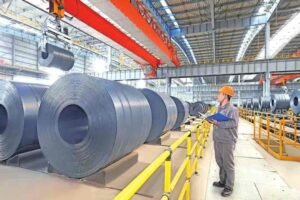
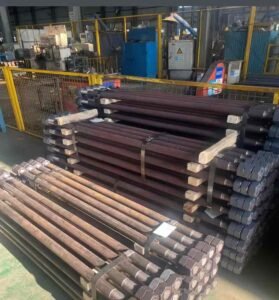
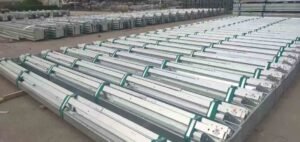
After engineering and design, the focus shifts to securing high-quality raw materials. The durability and safety of power towers and cell towers depend heavily on the reliability of these materials.
Key materials include:
-
Angle steel & tubular steel: The primary structural components, typically conforming to ASTM A36, ASTM A572, or GB/T Q235/Q345 standards for strength and ductility.
-
Steel plates: Used for gussets, base plates, and joint reinforcements.
-
Bolts, nuts, and washers: High-strength fasteners (Grade 8.8, 10.9, or equivalent) following ISO 898 or ASTM A325 standards to ensure joint stability.
-
Welding consumables: Electrodes and filler wires that match the base metal properties, minimizing weak points.
-
Protective materials: Such as zinc ingots for galvanization and coatings for anti-corrosion.
Process highlights:
-
Material Sourcing – Verified suppliers are selected based on international certifications (ISO 9001, ISO 14001). Raw steel often comes from global mills in China, Japan, or Europe, depending on project requirements.
-
Incoming Inspection – Materials undergo strict mechanical property testing (tensile, yield, elongation) and chemical composition verification via spectrometers.
-
Inventory & Traceability – Each batch of steel is recorded with heat numbers and certificates of compliance, ensuring full traceability during fabrication.
-
Consumables Check – Welding rods, cutting gases, and fasteners are prepared and tested according to project-specific specifications.
👉 According to World Steel Association, the choice of high-grade steel significantly impacts the longevity, safety, and maintenance costs of large infrastructure projects like telecom and power towers. Proper preparation at this stage ensures that later steps in forming, welding, and galvanization proceed without structural risks.
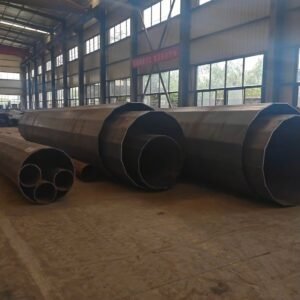
5. Steel Forming and Drilling: From Raw Profiles to Precision Components
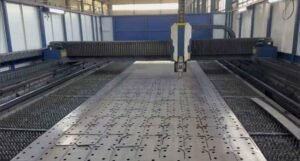
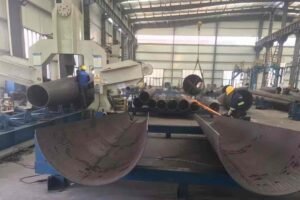
Once raw materials pass inspection, steel forming and drilling transforms standard profiles into tower-specific parts.
Key processes include:
-
Cutting & Shaping – Large angle steels and tubular pipes are cut using CNC plasma cutters or laser machines, ensuring high precision with minimal waste.
-
Cold & Hot Bending – Some structural members require bending to match design loads. Hydraulic presses shape the steel without compromising strength.
-
Drilling & Punching – Bolt holes are drilled or punched using CNC-controlled machines. Hole alignment is crucial because towers are often assembled on-site under tight tolerances.
-
Surface Preparation – Deburring and edge cleaning prevent cracks, rust initiation, and misalignment.
Quality Control:
-
Hole Tolerances: Typically within ±0.5 mm, as per ISO 2768 standards.
-
Dimensional Checks: Regular inspections ensure conformity with CAD drawings.
-
Trial Assembly in Workshop: Some projects require partial test-assembly before shipment to avoid site delays.
👉 According to American Institute of Steel Construction (AISC), precision in drilling and cutting directly influences tower stability and reduces risks of misfit during field erection.
6. Welding Process: Joining the Structural Framework
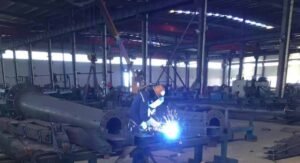
Welding is the backbone of tower integrity, turning individual steel members into a continuous, load-bearing system.
Steps involved:
-
Joint Preparation – Edges are beveled and cleaned to ensure strong penetration.
-
Welding Methods:
-
Shielded Metal Arc Welding (SMAW): Common for thick plates and base sections.
-
Gas Metal Arc Welding (GMAW/MIG): Faster and used for long seams.
-
Submerged Arc Welding (SAW): Preferred for heavy-duty joints.
-
-
Welding Sequence – Controlled to minimize residual stresses and deformation, especially in tall tower sections.
-
Preheating & Post-Weld Heat Treatment (if needed): For high-strength steels, preheating prevents cracking, and heat treatment restores toughness.
Weld Testing & Certification:
-
Non-Destructive Testing (NDT): Ultrasonic Testing (UT), Magnetic Particle Testing (MT), and Radiographic Testing (RT) ensure internal soundness.
-
Welding Standards: International projects follow AWS D1.1 (Structural Welding Code – Steel) or ISO 9606 (Welder Qualification Testing).
👉 The American Welding Society (AWS) highlights that poor welds are one of the most common causes of structural failures, making quality assurance in welding an essential safety step.

7. Hot-Dip Galvanization: Long-Term Corrosion Protection
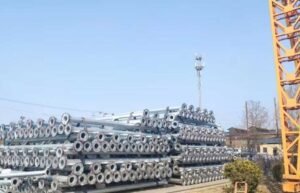
After welding, towers undergo hot-dip galvanization (HDG) to protect against corrosion for decades.
Process:
-
Surface Cleaning (Pickling): Steel is cleaned with acid baths to remove rust, mill scale, and grease.
-
Fluxing: A protective coating (often zinc ammonium chloride) prevents oxidation before dipping.
-
Zinc Bath: Steel members are immersed in molten zinc at 450°C (840°F). Zinc forms metallurgical bonds with iron, creating a Zn-Fe alloy layer.
-
Cooling & Inspection: Galvanized parts are slowly cooled, inspected for coating thickness, and tested for adhesion.
Advantages:
-
Provides 30–50 years of corrosion resistance, depending on the environment.
-
Self-healing ability: zinc corrodes preferentially, protecting exposed steel at scratches.
-
Complies with ISO 1461 (Hot-Dip Galvanized Coatings) and ASTM A123.
Industry Insight:
-
Towers in coastal or tropical climates particularly benefit from HDG, as noted by the International Zinc Association (IZA).
-
Some projects also add duplex coating systems (galvanization + paint) for extreme durability.
👉 Proper galvanization not only extends tower lifespan but also reduces long-term maintenance costs, which is a key factor in telecom and power infrastructure investment decisions.
8. Pre-Assembly on Ground: Ensuring Fit and Structural Compatibility
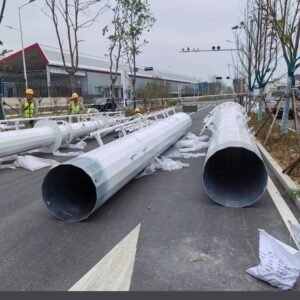
Before shipment, many tower sections undergo trial assembly in the factory yard. This step guarantees that all components fit perfectly when reassembled on-site.
Typical Pre-Assembly Procedures:
-
Bolt Matching: Bolted connections are tested to ensure alignment. Misaligned bolt holes can cause delays or require costly rework during field installation.
-
Module Testing: Sections of the tower (usually 2–3 panels high) are assembled to verify geometry and stability.
-
Flange Checks: For tubular poles, flanged joints are bolted together to confirm tolerances.
-
Marking & Numbering: Each part is labeled with identification codes for easy on-site reassembly.
Industry Insight:
-
According to FIDIC guidelines for infrastructure projects, factory pre-assembly significantly reduces on-site risks, improves project schedules, and ensures international project compliance.
-
Some telecom operators even require factory acceptance tests (FAT) as part of contractual obligations.
👉 This step minimizes errors during field erection, especially for international projects where site corrections are costly and logistically complex.
9. Final Inspection and Quality Assurance
Before towers leave the factory, they undergo multi-level inspection to ensure compliance with both contractual and international standards.
Inspection Scope Includes:
-
Dimensional Checks: Verifying height, diagonal measurements, and bolt alignment.
-
Surface Quality: Checking galvanization thickness with magnetic thickness gauges (per ASTM A123 or ISO 1461).
-
Welding Examination: NDT methods confirm weld soundness.
-
Mechanical Properties: Random samples may undergo tensile or hardness testing.
-
Compliance with Standards: Such as TIA-222 for telecom towers or IEC standards for transmission towers.
Third-Party Inspection:
-
International buyers often hire third-party agencies (e.g., SGS, Bureau Veritas, TÜV) to ensure transparency.
-
These agencies issue official inspection reports used for customs clearance and payment release under Letter of Credit (L/C).
👉 As noted by ISO Quality Management, rigorous final inspection ensures product reliability, reduces rework, and strengthens trust in global supply chains.
10. Quantity Verification, Packing, and Transportation
Once the towers pass inspection, the logistics phase begins.
Steps involved:
-
Quantity Verification: Each component is cross-checked with the bill of materials (BOM).
-
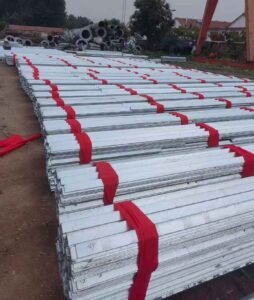
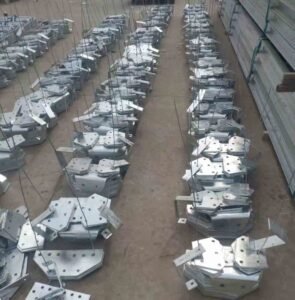
Packing:
-
Small parts (bolts, nuts, washers) are packed in wooden cases or steel drums.
-
Large members (angle steel, tubular poles) are bundled with steel straps and anti-rust wrapping.
-
-
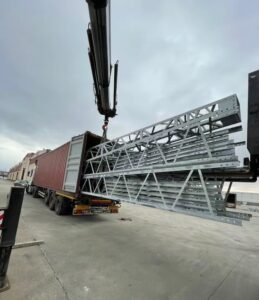
Domestic Transport: Towers are moved by truck from factory to port or construction site. Oversized loads may require police escorts or permits.
-
International Shipping:
-
Towers are usually shipped in 20ft or 40ft containers, while oversized tubular sections may go as breakbulk cargo.
-
Shipping terms follow Incoterms 2020 (FOB, CIF, DDP).
-
Customs clearance requires packing lists, certificates of origin, inspection reports, and export licenses.
-
Industry Best Practice:
-
The International Chamber of Commerce (ICC) recommends clearly defined Incoterms to avoid disputes over responsibility in freight and insurance.
-
For overseas buyers, marine insurance is critical to mitigate risks during sea transport.
👉 This step ensures the right materials reach the right destination, ready for efficient field installation.
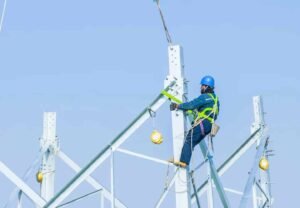
11. On-Site Installation and Commissioning
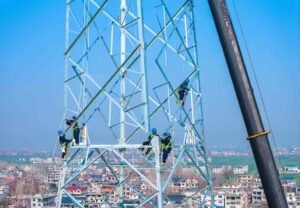
The final stage is erecting the tower at its destination site.
Typical Steps:
-
Foundation Preparation: Civil works (excavation, concrete pouring, anchor bolts placement) must cure before steel erection begins.
-
Tower Erection:
-
Derrick & Gin Pole Method: For lattice towers, sections are lifted and bolted sequentially.
-
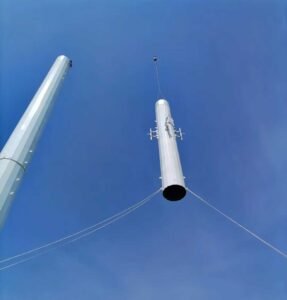
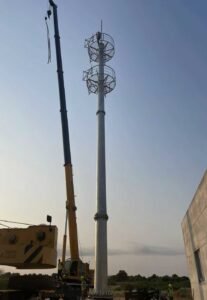
Crane Assembly: Tubular or monopole towers are lifted by heavy-duty cranes.
-
-
Bolt Tightening: Bolts are tightened to torque specifications per ASTM A325/A490 standards.
-
Electrical & Telecom Equipment Mounting: Antennas, transmission lines, or power cables are installed once the structure is secure.
-
Safety Systems: Lightning protection, grounding systems, and aviation warning lights are added.
-
Commissioning & Handover: The tower is inspected again, then officially handed over to the client.
Challenges in International Projects:
-
Remote sites may require helicopters for lifting tower segments.
-
In desert or coastal regions, engineers must consider soil corrosion and high winds.
👉 According to the Occupational Safety and Health Administration (OSHA), tower erection is a high-risk activity, making fall protection, rigging safety, and site supervision mandatory.
Conclusion
From the first contractual agreement to the final antenna being bolted in place, tower manufacturing is a meticulous process. Each step — from steel selection to hot-dip galvanizing and international shipping — is critical to ensuring that the final tower can withstand decades of service in harsh environments.
For further reference, see:
-
International Telecommunication Union (ITU) – Telecom infrastructure standards.
-
ISO Standards – Quality, safety, and environmental management.
-
World Steel Association – Steel materials research. The above content is edited and sorted out by Jingxian Tianyi Tower Manufacturing Co., Ltd. Jingxian Tianyi Tower Company is committed to providing high-quality, safe and reliable tower products for global customers. Please click for contact information.




